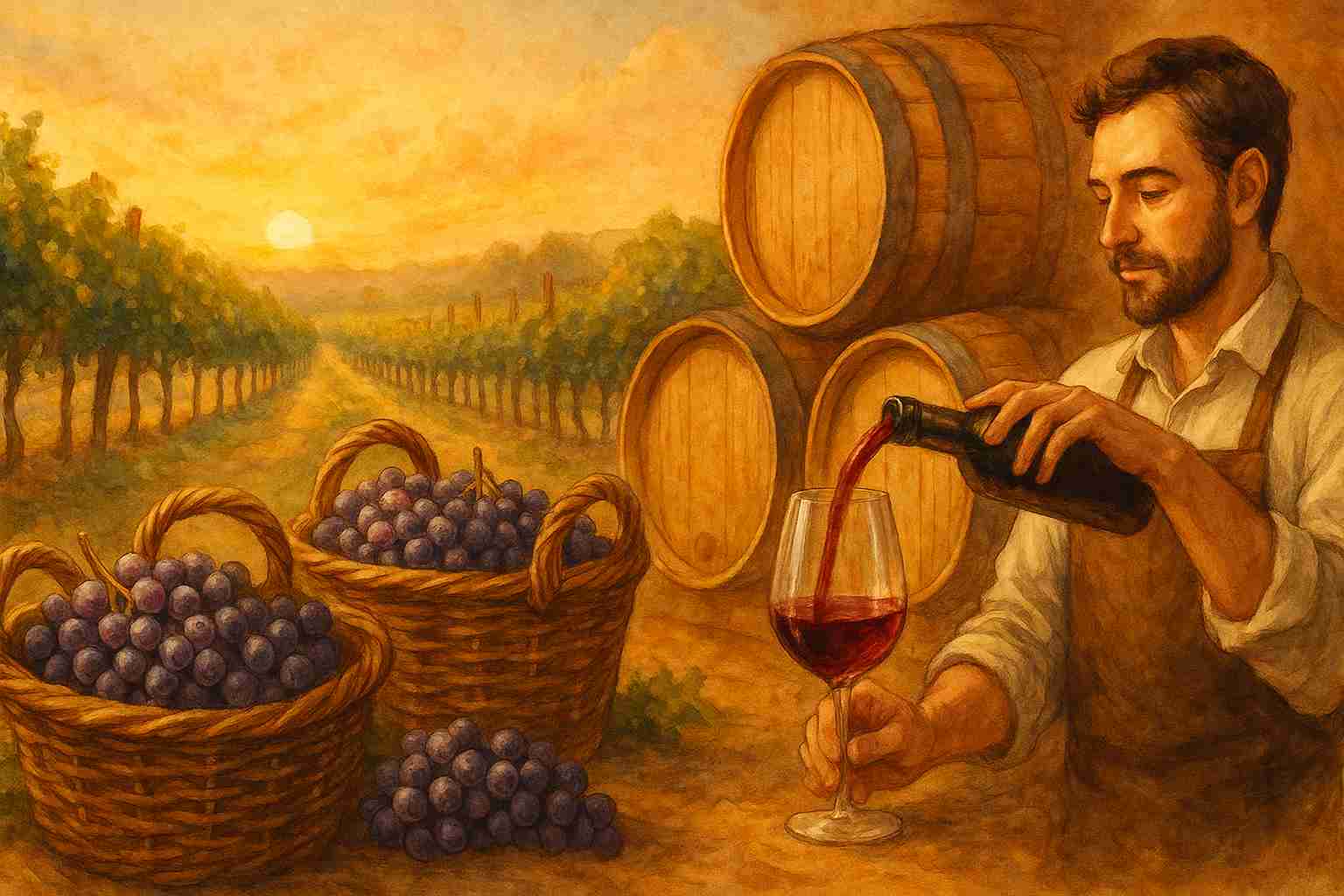
If you’ve ever felt, at a wine tasting, that a glass of wine holds an entire universe inside, get ready to find out why. The wine making process is not a mechanical recipe; it’s a journey that begins in the soil and culminates in your senses. On this tour, Finca Viladellops—a historic wine-making village nestled in the Garraf Massif—opens its doors to show you how tradition, innovation, and absolute respect for nature intertwine to create Mediterranean wines with a soul of their own.
More Than a Process: Our Winemaking Philosophy at Finca Viladellops
A Legacy Since 1877: History in Every Drop
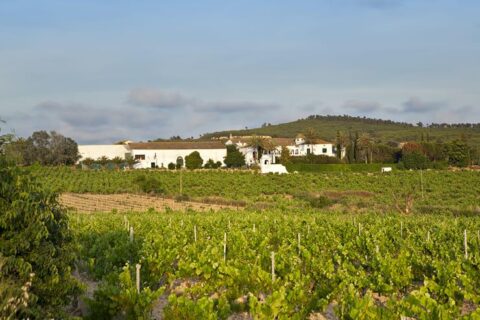
The Desvalls family has been cultivating these slopes for nearly a century and a half. The old town—with its Medieval Tower and the Chapel of Sant Joan—is not just scenery: it’s the living testimony of a saga that has made wine its way of conversing with the land.
The Secret of the Garraf Massif: A Unique Terroir
Imagine clay-limestone soils dotted with marine fossils. At 250 meters above sea level, the Mediterranean breeze moderates the summers and enhances the minerality: iodine in the whites, chalk and graphite in the reds. That saline personality is our hallmark.
Respect for the Land: Our Organic Commitment
Since 2006, we have been certified for organic viticulture. We don’t use herbicides or systemic pesticides; we promote biodiversity with cover crops and work according to lunar cycles when nature advises it. The result: balanced vines and grapes full of life.
The Voice of Native Grapes: Xarel·lo and Garnacha as Our Standard-Bearers
We believe the best path to authenticity is to cultivate what is ours by birthright. The white Xarel·lo and the red Garnacha lead our 60 hectares of vineyards, accompanied by historic vines like Sumoll and Monastrell. They are resilient varieties, capable of expressing the essence of the Garraf without artifice.
The Journey Begins: Care in the Vineyard and the Harvest
The Annual Cycle of the Vine
- Budbreak (March-April): The shoots awaken and the first leaves appear. At Viladellops, we leave cover crops to gently compete with the vine, preventing overly vigorous growth and adding organic matter.
- Flowering and Fruit Set (May-June): The vine flowers; the berries set and the clusters form. We naturally control mildew with minimal doses of sulfur and copper treatments and apply green pruning selectively to regulate production.
- Veraison (July): The grapes change color. This is the time for shoot trimming and manual leaf removal on the north-facing side to aerate the clusters and prevent botrytis, always respecting the vineyard’s biodiversity.
- Ripening (August-September): Sugars, aromas, and tannins concentrate. We only irrigate in extreme cases (support irrigation) and favor phenolic ripeness thanks to the sea breeze that cools the Garraf afternoons.
- Winter Dormancy: After the harvest, the vine goes into hibernation. We perform dry pruning in January to balance the plant and prepare for the next season.
The Quest for Optimal Ripeness
For us, optimal ripeness is not just about reaching a certain alcohol level. We analyze sugars (Brix), total acidity, pH, and, above all, tannin ripeness. Every week before the harvest, we taste the berries: we chew the pulp to feel the sweetness and acidity, squeeze the skin between our fingers to assess color, and taste the seed. If it’s crunchy and tastes like hazelnut, it’s a sign of a round tannin. When all parameters align, the harvest crew moves in.
Harvesting by Hand at Dawn
Our team hand-picks the clusters into 15 kg boxes. They reach the winery in less than an hour, preventing oxidation and ensuring that only the best fruit writes the story of Viladellops.
Destemming and Crushing: Delicacy is Key
Upon arrival, the grapes are destemmed to separate them from the stems and avoid unwanted herbaceous notes. A gentle crushing releases the must without breaking the seeds, keeping the tannins fine. Temperature control ensures that the fruit’s purity remains intact.
In this step, the must coexists with the grape skins. From them, we extract:
- Anthocyanins: pigments responsible for the violet color of red wines.
- Tannins: phenolic compounds that provide structure and aging potential.
During the wine maceration, the cap—a solid layer of skins that floats on top—is formed. To manage it, we use two techniques:
- Pumping over (Remontado): We pump must from the bottom of the tank and spray it over the cap. This gently oxygenates and extracts color without excessive tannin.
- Punching down (Bazuqueo): We use a tool to manually push the cap down into the must. It’s a more delicate technique, ideal for old-vine Garnacha plots where we seek a silky texture.
For red wines like Viladellops Garnacha, we practice short macerations (5-7 days at 24°C) to enhance fresh red fruit; for the Finca Viladellops Tinto, we extend the skin contact to 20 days (25-27°C) to achieve depth and complexity. For the white Xarel·lo, we press directly and avoid maceration, preserving its vibrant acidity.
The Heart of the Wine: Alcoholic and Malolactic Fermentation
The Magic of Yeast: Alcoholic Fermentation
Yeasts consume glucose and fructose and transform them into ethyl alcohol, CO2, and heat. This process also releases esters and aromatic compounds that define the wine’s fruity profile.
Why do we champion our native yeasts? Each plot harbors unique yeast strains that have co-evolved with the vineyard. Using them means bottling the landscape: they grant complexity and ensure no two batches are ever exactly the same. We avoid commercial yeasts except in challenging vintages.
Refining the Character: Malolactic Fermentation
Once alcoholic fermentation is complete, lactic acid bacteria convert the sharp malic acid into the softer lactic acid. The wine becomes rounder and creamier. This is how “approachable” red wines are born, full of texture and balance, ready to rest.
The Artisan’s Rest: Aging in Barrels, Concrete, and Steel
Each wine demands its own cradle:
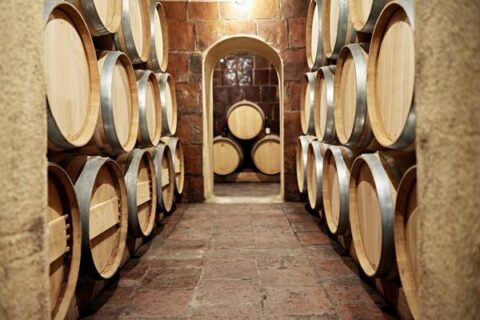
- French oak barrels (225 L): We use fine-grained barrels with a medium+ toast. The heat from toasting caramelizes the wood’s hemicellulose, imparting notes of vanilla, cinnamon, and light cocoa. Micro-oxygenation stabilizes color and softens tannins in icons like Finca Viladellops Tinto or the exclusive Parany, which rest for 12-14 months.
- Vitrified concrete tanks: Concrete imparts no flavor, but its porosity allows for micro-oxygenation similar to a barrel without the woody notes. Its great thermal inertia also keeps the temperature naturally stable. Perfect for Viladellops Xarel·lo, enhancing its creamy texture and crisp white fruit.
- Stainless steel: A completely inert environment that maximally preserves bursts of primary fruit and freshness. It’s the choice for the youth and vivacity of Viladellops Garnacha.
From the Cellar to the World: Clarification and Bottling
Before being labeled, the wine is clarified with bentonite or vegetable proteins, removing turbidity without altering flavor. A light filtration polishes its shine. Bottling marks the beginning of aging in the bottle, where aromas integrate and complexity blossoms on its way to your table.
Frequently Asked Questions about the Wine Making Process
What is the difference between red and white winemaking?
For the red Garnacha, we macerate the must with the skins to extract color and tannins. For the white Xarel·lo, we press the grapes directly and ferment only the clean juice, achieving a limpid and floral profile.
What does it mean for a wine to be organic?
It means the absence of synthetic chemicals, responsible water use, and the promotion of biodiversity. At Viladellops, this has been certified since 2006 and can be felt in the vitality of our wines.
Do you make Cava at Finca Viladellops?
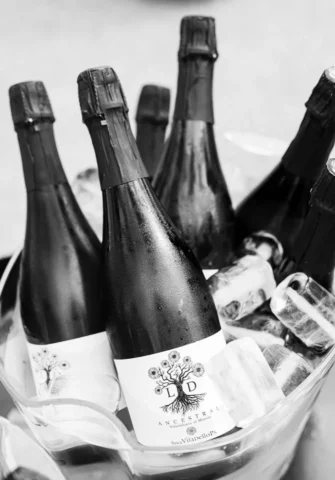
No. Our sparkling wine is L.D. Ancestral, made with a single fermentation in the bottle following the Ancestral Method. This results in fine bubbles, 100% Xarel·lo, and absolutely genuine freshness.
What does it mean for a wine to have “mineral notes” and why do Viladellops wines have them?
The limestone soils full of marine fossils in the Garraf Massif impart calcium and magnesium ions to the wine, which are perceived as saline or flinty notes. That mineral footprint is the signature of our land.
Does all wine improve with age? How long can I cellar a Viladellops wine?
It depends on the style. Young wines like Viladellops Garnacha are best enjoyed in their first 3 years, bursting with fruit. Age-worthy wines like Finca Viladellops Tinto or Parany can evolve for 8 to 15 years, gaining tertiary complexity (leather, tobacco, truffle).
What exactly are “pumping over” and “punching down”?
Pumping over: Pumping the must over the cap to extract color and tannin. Punching down: Manually pushing the cap down into the liquid; a gentler, more precise technique. We choose one or the other depending on the delicacy we’re aiming for.
Live the Viladellops Experience: From Theory to Practice
Nothing can replace the sound of gravel underfoot in the vineyard, the aroma escaping the fermentation tank, or the quiet of the barrel room. Book your visit—from the “History and Wine” tour to the guided Premium wine Tasting in Barcelona—and witness every step described here firsthand. You’ll leave with a full glass, and an even fuller heart.
Conclusion
The wine making process at Finca Viladellops is a dialogue between past and future: the wisdom of 1877 is supported today by organic practices, respectful technology, and an unwavering passion. We hope this journey, from the vine to your glass, has shown you just how many stories can fit in a single sip.